
KEYNOTE speakers
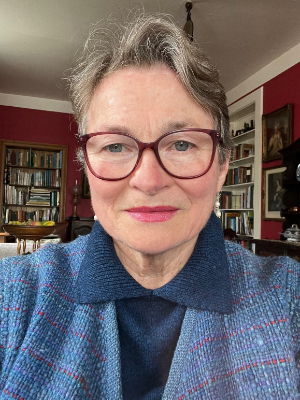
Prof Kathleen Heugh
Adelaide University, Australia
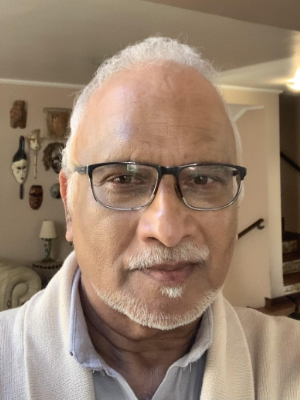
Prof Lynn Mario T. Menezes de Souza
University of São Paulo, Brazil
Lynn Mario T. Menezes de Souza began his career at Eduardo Mondlane University in Mozambique in the 1970s and has been senior full professor at the Modern Languages Department of the University of São Paulo, Brazil, for almost four decades. He supervises doctoral and post-doctoral research in language policy, literacy studies and educational linguistics from anti-racist and decolonial perspectives.
His publications include the co-edited volumes: Postcolonial Perspectives on Global Citizenship Education (2012) and Glocal Languages and Critical Intercultural Awareness: the south answers back (2019). His most recent publications in English include A Conversation with Lynn Mario Menezes de Souza in Deumert & Makoni (eds) (2023) From Southern Theory to Decolonizing Sociolinguistics: Voices, Questions and Alternatives; the chapter Coloniality, Epistemicide and Language Learning in Brazil (2024) in Limerick, N. et al (Eds) Multilingual Nations, Monolingual Schools; the article Kshetra and the nurturing of a plurilingual ethos (2024) in the Journal of Multilingual Theories and Practices; and the chapter ‘Southernizing Linguistics’ (2025) in Entanglements: Between Decolonial and Southernizing Linguistics, Makoni, S. et al (Eds.).
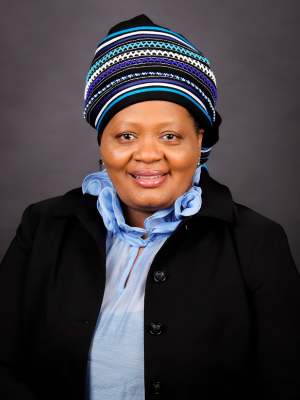
Dr. Naledi Mbude-Mehana
Department of Basic Education, South Africa
Dr. Naledi Mbude-Mehana is a distinguished sociolinguistics and a leading voice in the field of African language education (especially bilingual Science Education), multilingualism, and language policy in South Africa. With over 26 years of academic and community-based research experience, she has dedicated her career to advancing the visibility, intellectualization, and equitable use of African languages in education, public life, and in the economy.
Currently serving as a Deputy Director General (DDG) in the Department of Basic Education (DBE); Dr. Mbude-Mehana specializes in the sociolinguistic dynamics of multilingual societies, with particular focus on the intersection of language, identity, power, and social justice in education. Her groundbreaking work explores how language ideologies shape educational outcomes, particularly for learners from historically marginalized communities. She presents extensively in local, regional and international platforms on language and education; challenging the historical marginalization of African languages pre- and post-apartheid in South Africa.
Dr. Mbude-Mehana has played a pivotal role in shaping national language policy, contributing to the Department of Basic Education’s Mother Tongue-Based Bilingual Education (MTbBE) strategy. She sits on the panel of advisors to the CHE Review on ITE standards related to multilingualism. Having established the Eastern Cape Department of Education’s Language Unit, a first in the country (2012). She established the DBE’s Language Unit, in line with UOOLA, 2012. The National Language Unit leads public education campaigns on multilingual pedagogy and MTBBE as a vehicle to widen epistemic access.
She cautions on African languages just being used as medium versus being used a meaning making systems. Her thesis is that there is a difference between the two: As a medium: the language is mostly a channel for instruction, translation, or classroom delivery. For meaning making: the language is a tool for reasoning, discussion, concept-building, and academic expression. She believes that the difference matters; as if African languages are only used as a medium, lessons can still stay teacher-centred and superficial, with little deep understanding. If African languages are used for meaning making, learners can connect new ideas to what they already know, which improves comprehension and literacy. Meaning-making use also supports intellectualization of African languages, because the language grows through use in higher-order thinking; this she says is central to the learning, teaching and assessment of mathematics and science. Part of the challenge we have with the low outcomes in the Foundation Phase; is the use of African languages just as medium. She coined the term Mother Tongue-based Reading Literacy (MTbRL, 2024) for the DBE’s new Reading Literacy Strategy (2024 – 2030).
Her work has been recognized nationally and internationally, she was invited by UNESCO twice in 2025; to accompany the Minister of Basic Education to present on South Africa’s MTBBE implementation on International Mother Language Day celebrations (21 February 2025); and to present her work on Leveraging AI to develop African Languages with Prof Vukosi Marivate (UP) and Prof. Langa Khumalo (SADILAR, NWU) at the Digital Learning Week (2025) at the UNESCO Headquarters in Paris, France (September, 2025). Dr. Mbude-Mehana is committed to decolonizing education through language justice, advocating for curricula that center African knowledge systems and linguistic diversity.
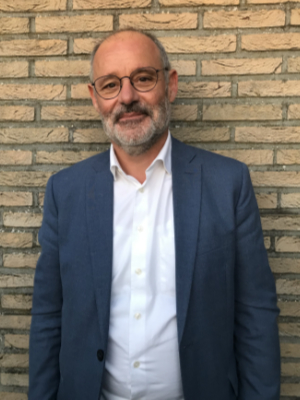
Prof Stef Slembrouck
Ghent University, Belgium
Prof Marcelyn Oostendorp
Stellenbosch University, South Africa
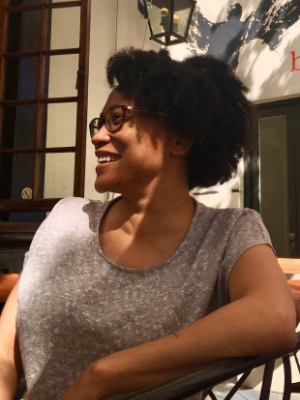
Marcelyn Oostendorp is an Associate Professor in the Department of General Linguistics at Stellenbosch University, South Africa. Her research is primarily concerned with multilingual and multimodal forms of meaning-making in contexts such as education, the media, and the workplace. In recent years her research has been focused on refiguring the languaging human in current sociolinguistic theory. Her work has appeared in journals such as Applied Linguistics, Critical Discourse Studies, and International Journal of Bilingual Education and Bilingualism. She is an associate editor of Journal of Sociolinguistics and one of the co-editors of the first Handbook of Language and Trauma.
Prof Shaila Sultana
BRAC University, Bangladesh
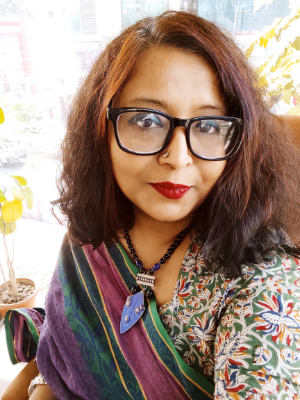
Shaila Sultana has interests in critical sociolinguistics, language and nationalism, religionism, and genderism, trans-approaches to language and identity, language in popular culture and social media, and decolonisation and deeliticisation of English in post-colonial contexts. She is dedicated to expanding the recognition of sociolinguistics as a field of research among young academics and researchers in Bangladesh and raising their awareness of the significance of sociolinguistics in advancing linguistic rights, social justice, and equity in the Global South. The first books on sociolinguistics and English language education in Bangladesh, Language in Society in Bangladesh and Beyond: Voices of the Unheard in the Global South (Routledge, USA) and Routledge Handbook of English Language Education in Bangladesh (Routledge, UK) were edited by Shaila Sultana and her colleagues.
Other recent publications of Shaila Sultana include a co-authored book, Popular Culture, Voice and Linguistic Diversity (Palgrave McMillan, USA), co-edited books, Language and Sustainable Development in Bangladesh (Routledge, UK), Translingual Practices in English Language Education in South Asia: Inclusivity and Equity (in press, Multilingual Matters), Remote and Online Language Teaching and Learning (in press, Universiti Sains Malaysia Press, Malaysia) and a Special Issue of Australian Review of Applied Linguistics titled ‘Translingual practices entangled with semiotised space and time’. Shaila Sultana is on the editorial boards of Language in Society (Cambridge University Press), Cambridge Elements in Language and Power (Cambridge University Press), Journal of English-medium Instruction (John Benjamins), Ampersand (Elsevier), Journal of AsiaTEFL, Journal of Education, Language, and Ideology (JELI), Crossing, Journal of BELTA, and other journals.
With more than 80 articles and chapters in top-tiered peer-reviewed journals and books, Shaila Sultana has been the most cited author in ‘Linguistics and Literature’ at the University of Dhaka and Bangladesh since 2021 (according to the AD Scientific Index).
Proudly hosted by

In association with
In association with

With thanks to our sponsors


XL Millennium has been appointed as symposium organisers for SS26. Communication regarding the symposium may come directly from the company.

Contact us
© Sociolinguistics Symposium 2026